Quartz, quartzite or porcelain? The Arizona answer is not the showroom answer.
Which countertop survives sun, hard water and 115° outdoor kitchens in Phoenix and Scottsdale. Product comparison, the lemon test to do at the stone yard, and where each slab belongs.
- Reading
- 3 minutes
The short answer
Engineered quartz is great indoors and a gamble in Arizona sun. If the counter sees direct light or lives outside, choose porcelain or true quartzite.
- Crushed stone in engineered quartz. The rest is resin, which UV can yellow
- ~90%
- Resin in porcelain slab, so sun doesn’t change its color
- 0
- How long the lemon test takes at the stone yard
- 10 min
- Mohs hardness of true quartzite, harder than granite
- 7+
The three slabs Arizona designers are specifying
Marble is still beautiful, but in a hard-water state it etches fast. These are the three we use most.
- 01
Porcelain slab (6–12 mm)
Arizona fit: 5 out of 5- Best for
- Outdoor kitchens, sunny islands, waterfall edges, backsplashes
- Why it works
- Color doesn’t change in UV, it handles heat, and it barely absorbs anything. The most worry-free surface for Arizona.
- Watch out
- Edges can chip on impact. Specify a mitered or eased edge, and use a fabricator with porcelain experience.
- 02
True quartzite
Arizona fit: 4 out of 5- Best for
- Statement islands where you want real stone with movement
- Why it works
- Natural, very hard and won’t yellow in sun. Each slab is unique.
- Watch out
- Some stone sold as “soft quartzite” is really marble or dolomite. Do the lemon test before you buy.
- 03
Engineered quartz
Arizona fit: 3 out of 5- Best for
- Interior perimeter counters, bathrooms, laundry rooms
- Why it works
- Consistent color, no sealing needed and easy to keep clean. Great value away from windows.
- Watch out
- Most makers don’t warranty it outdoors. A hot pan or years of direct sun can discolor the resin.
How each one handles the desert
| Feature | Porcelain | Quartzite | Quartz |
|---|---|---|---|
| Direct sun / UV | Excellent | Excellent | Poor |
| Hot pan | Excellent | Very good | Poor |
| Hard-water spots | Wipe off | Wipe off (sealed) | Wipe off |
| Outdoor kitchen | Yes | Yes | No |
| Sealing | Never | Yearly | Never |
Do it yourself
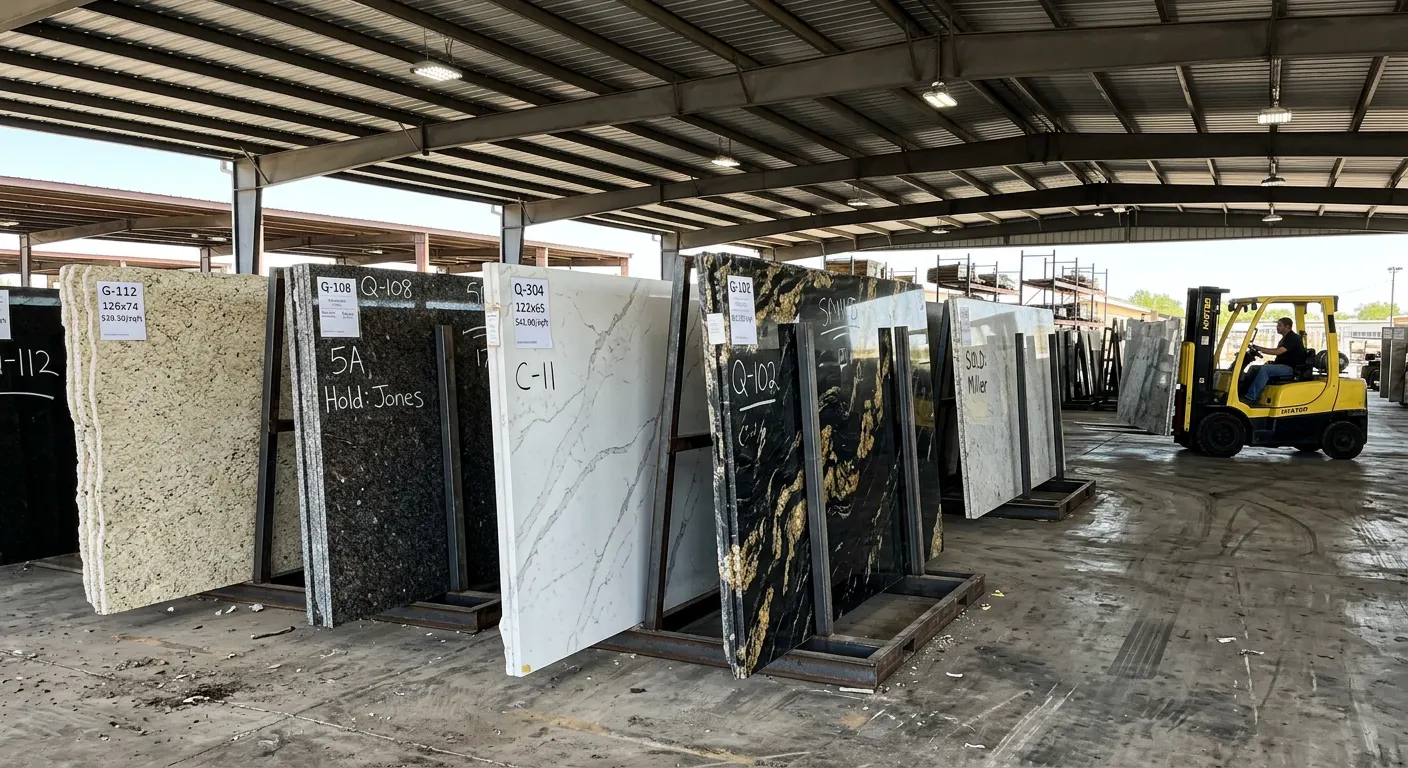
DIY: the lemon test at the stone yard
Ask the yard for an offcut or the back of the slab. Bring a lemon, a permanent marker and a glass bottle.
- Time
- 10 minutes
- Cost
- About $1
You will need
- Half a lemon
- Permanent marker
- Glass bottle
- Paper towel
- Water
Squeeze and wait
Squeeze lemon juice on the surface and leave it for five minutes.
Wipe and look at an angle
If you see a dull spot, the stone is etching. That means it has calcite and will etch from lemons, wine and hard water.
Scratch with glass
Drag the bottle edge across firmly. True quartzite will scratch the glass. Marble will get scratched itself.
Marker test
Draw a line, wait two minutes and wipe with water. A shadow left behind means the slab is porous and needs regular sealing.
Before you build
Check your own city's rules
Permits, zoning and setbacks are set by the city or town, and they change. Use these official pages to confirm what applies to your lot before you order materials or sign a contract.
Check paperwork you already have
Your parcel number (APN) is printed on your county property tax statement and usually on your deed or title documents.
Or search by address
The Maricopa County Assessor lets you search by street address or owner name and returns the parcel number.
Use it on the city tools
Scottsdale, Phoenix and Cave Creek map and permit tools accept an address, and many also accept a parcel number.
These are links to official government sites, not advice. Requirements depend on your lot, zoning and the scope of work, so confirm with the city or town and your designer before you start.
Where it matters
Scottsdale
Indoor-outdoor kitchens with pocketing doors bring sun onto the island. Porcelain or quartzite there.
Phoenix
Valley water is hard. Low-maintenance porcelain and quartz keep weekly cleaning simple.
Cave Creek
Ranch-style outdoor kitchens and ramadas: porcelain slab stands up to sun, dust and grease.
FAQ
Questions, answered
Can I use quartz in an outdoor kitchen if it’s covered?
Reflected light and heat still reach covered counters in Arizona. Most quartz manufacturers exclude outdoor use from the warranty, so porcelain is safer.
Is porcelain slab as durable as granite?
The surface is very hard and stain-proof. The weak point is the edge, which is why edge detail and an experienced fabricator matter.
How often should quartzite be sealed?
Once a year is typical. Do the water test: if water darkens the stone after 10 minutes, it’s time to reseal.