Your west windows are a space heater. Here is how to turn it off.
A product-by-product guide to stopping 4 p.m. sun in Phoenix and Scottsdale homes: exterior solar screens, low-E glass, window film and interior shades compared, plus a weekend DIY install.
- Reading
- 3 minutes
The short answer
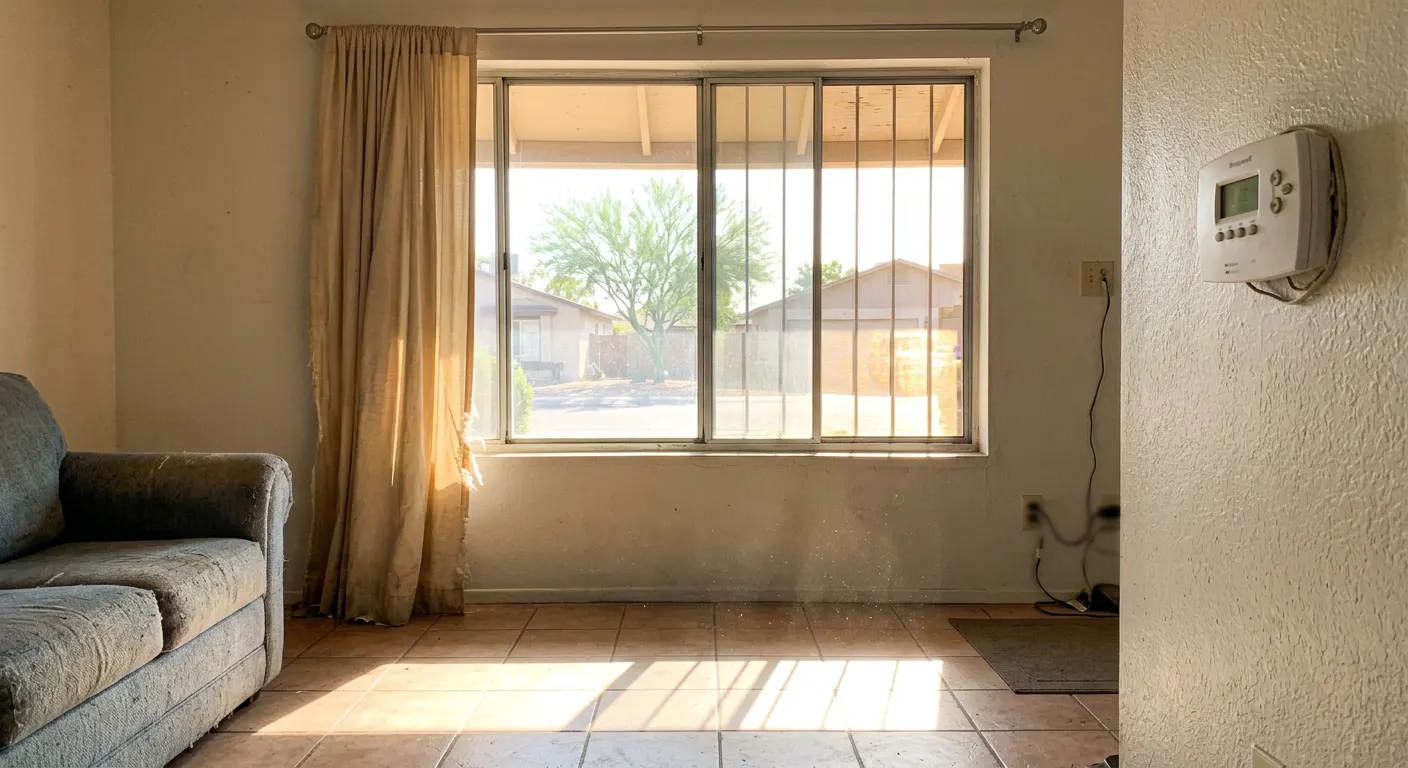
Stop the sun outside the glass. Once heat passes through the window, an interior shade only decides where in the room that heat ends up.
- Heat gain coefficient of old clear dual-pane glass
- ~0.70
- Triple-silver low-E glass, the current Valley standard
- ~0.25
- Openness-rated exterior screens block up to this much solar heat
- 90%
- The hours a west wall does the most damage
- 4–7 p.m.
The four fixes, ranked for a west wall
Every option below works. They differ in where they stop the heat, what they cost and what they do to your view.
- 01
Exterior solar screens (80–90% fabric)
Arizona fit: 5 out of 5- Best for
- West and south walls, patios, rentals you can’t reglaze
- Why it works
- The fabric catches the sun before it touches glass, so the window itself never heats up. Biggest comfort change per dollar.
- Watch out
- Darker fabric (charcoal, black) preserves the view better than beige, which glows in direct sun.
- 02
Triple-silver low-E replacement glass
Arizona fit: 4 out of 5- Best for
- Remodels and new builds where windows are being replaced anyway
- Why it works
- Invisible, permanent and blocks most UV. Pairs with a solar screen for the coolest result possible.
- Watch out
- Expensive if done only for heat. Verify the SHGC on the label, not the brochure.
- 03
Spectrally selective window film
Arizona fit: 3 out of 5- Best for
- Big fixed glass you love the look of, HOA-restricted exteriors
- Why it works
- Rejects infrared heat while staying nearly clear, and blocks about 99% of UV that fades rugs and wood.
- Watch out
- Can void some window warranties and stress dual-pane seals. Use a certified installer and a film your glass maker approves.
- 04
Interior motorized shades
Arizona fit: 2 out of 5- Best for
- Glare, privacy and finishing the room
- Why it works
- Beautiful and automated. A light-colored, reflective backing helps somewhat.
- Watch out
- Heat is already inside the house. Use them for comfort and style, not as the main heat fix.
Side by side
| Feature | Exterior screen | Low-E glass | Window film | Interior shade |
|---|---|---|---|---|
| Where heat stops | Outside | At the glass | At the glass | Inside the room |
| View | Slightly tinted | Clear | Nearly clear | Hidden when down |
| UV / fade protection | High | High | Very high | Medium |
| Typical lifespan | 10–15 yrs | 25+ yrs | 10–15 yrs | 10+ yrs |
| DIY-friendly | Yes (fixed) | No | Not recommended | Yes |
Ranges are typical for Phoenix-area installs. Always compare the NFRC label on the specific product.
Do it yourself
DIY: install a fixed solar screen on one window
Start with your worst west window. You’ll feel the difference that afternoon.
- Time
- 2–3 hours
- Cost
- $60–$120 per window
You will need
- Tape measure
- Screen frame kit (1/2" or 3/4")
- 90% solar screen fabric
- Spline + spline roller
- Utility knife
- Drill + clip hardware
Measure the opening three times
Measure width and height at top, middle and bottom. Use the smallest number and subtract 1/8 inch.
Cut and assemble the frame
Cut frame pieces with a fine-tooth hacksaw, then snap the corners together on a flat surface.
Roll in the fabric
Lay fabric over the frame, roll spline into one long side, pull the opposite side taut and repeat. Tight fabric does not whistle in monsoon wind.
Trim and mount
Trim excess with a utility knife. Mount with turn clips or screw-on brackets on the outside of the frame.
Check it at 5 p.m.
Put your hand on the inside of the glass. Compare it to an unscreened window. That gap is your result.
Before you build
Check your own city's rules
Permits, zoning and setbacks are set by the city or town, and they change. Use these official pages to confirm what applies to your lot before you order materials or sign a contract.
Check paperwork you already have
Your parcel number (APN) is printed on your county property tax statement and usually on your deed or title documents.
Or search by address
The Maricopa County Assessor lets you search by street address or owner name and returns the parcel number.
Use it on the city tools
Scottsdale, Phoenix and Cave Creek map and permit tools accept an address, and many also accept a parcel number.
These are links to official government sites, not advice. Requirements depend on your lot, zoning and the scope of work, so confirm with the city or town and your designer before you start.
Where it matters
Scottsdale
Desert-contemporary homes with walls of glass facing Camelback and McDowell views are the classic case. Solar screens keep the view and lose the heat.
Phoenix
Older ranch homes often still have clear dual-pane glass. Screens on the west side are the fastest comfort upgrade.
Cave Creek
Long sightlines and big sliders. Motorized exterior screens double as monsoon dust protection.
FAQ
Questions, answered
Will solar screens make my house dark?
An 80% screen keeps rooms bright and still cuts most heat. A 90% screen is darker but best for a hard west exposure. Many homeowners use 90% on the west and 80% on the south.
Does window film void my window warranty?
It can. Many manufacturers approve specific films. Ask the installer for the glass maker’s approval letter before applying film to dual-pane windows.
What should I prioritize on a budget?
Exterior screens on west and south windows first. Replace glass only when the windows are failing or you’re already remodeling.