“Performance fabric” doesn’t mean fade-proof. Here is what does.
Which upholstery and drapery fibers survive Arizona sun, why stain-resistant isn’t the same as UV-resistant, and a 30-day sun test you can run on any swatch.
- Reading
- 3 minutes
The short answer
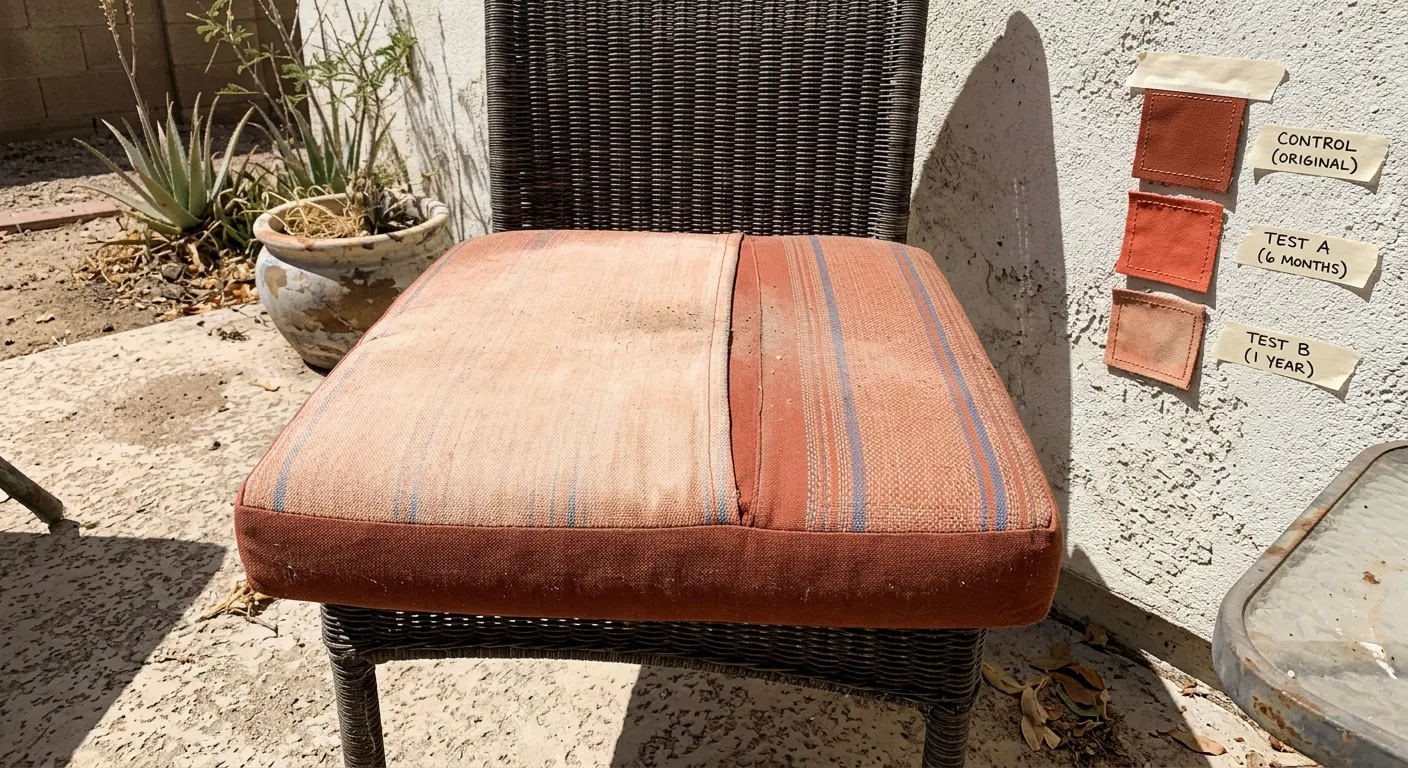
Stain resistance and fade resistance are separate ratings. In a sunny Arizona room, choose solution-dyed fibers, where the color goes all the way through the fiber.
- Hours of lightfastness for top solution-dyed acrylics
- 1,000+
- UV blocked by most quality window films
- 99%
- Long enough for a swatch test to show fading
- 30 days
- Fastest to fade: silk, then linen and cotton
- #1
Why fabric fades so fast here
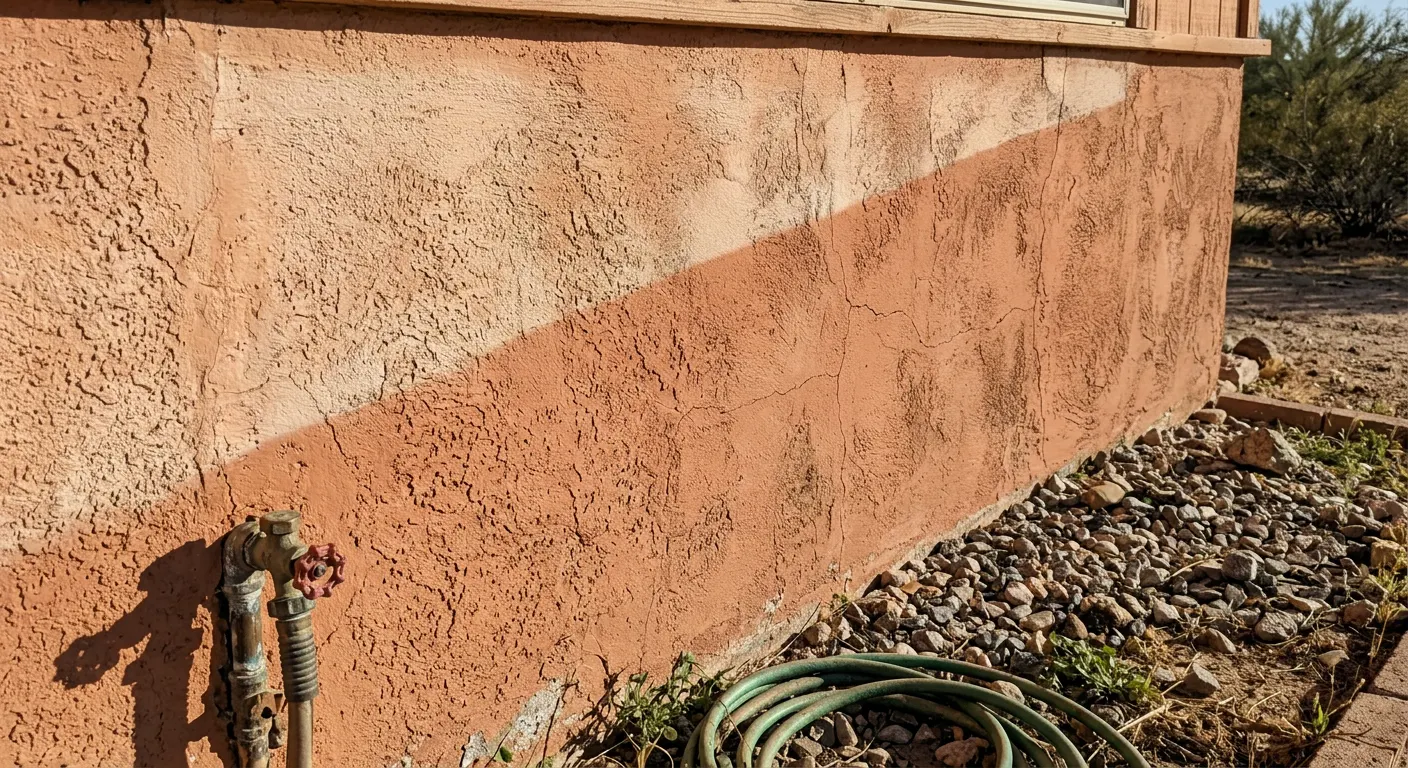
Most fabric is dyed on the surface. UV light breaks down those dye molecules. In Arizona, a sofa near a window gets more UV in one summer than many homes elsewhere get in several years.
Solution-dyed fabric is different: color is added to the liquid fiber before it is spun. Think of a radish (color only on the skin) compared to a carrot (color all the way through). Sun has a much harder time fading a carrot.
Fibers ranked for a sunny room
All of these are available in soft, indoor-quality weaves. Gone are the days when sun-resistant meant stiff patio cushions.
- 01
Solution-dyed acrylic
Arizona fit: 5 out of 5- Best for
- Sofas and chairs by windows, indoor-outdoor rooms
- Why it works
- The best fade resistance you can buy, with a soft hand and easy cleaning.
- Watch out
- Pilling is possible on very loose weaves. Choose a tighter weave for seating.
- 02
Solution-dyed olefin / polypropylene
Arizona fit: 4 out of 5- Best for
- Family rooms, kids, pets
- Why it works
- Very good fade resistance and very stain resistant. Usually less expensive than acrylic.
- Watch out
- It can be sensitive to high heat, so don’t iron or steam it.
- 03
Polyester performance blends
Arizona fit: 3 out of 5- Best for
- Rooms with indirect light
- Why it works
- Durable and stain resistant.
- Watch out
- Often piece-dyed. Check the lightfastness rating, not just the word “performance.”
- 04
Linen, cotton, silk
Arizona fit: 1 out of 5- Best for
- Rooms with north light or UV-filtering film
- Why it works
- Unmatched texture and drape.
- Watch out
- Fades and weakens in direct sun. Silk drapery can rot at the folds in one or two seasons.
Do it yourself
DIY: the 30-day sun test
Do this before you commit to yards of fabric. It costs nothing and it’s a better test than any spec sheet.
- Time
- 5 minutes + 30 days
- Cost
- Free
You will need
- Fabric swatch
- Piece of cardboard
- Painter’s tape
- Your sunniest window
- Phone camera
Cover half
Tape cardboard over half the swatch, face up.
Place it in the hot spot
Put it where the furniture will actually go, in the brightest afternoon light.
Photograph weekly
Take a photo in the same light each week so you can compare.
Remove the cover
After 30 days, compare both halves. If you can see a line, that fabric isn’t right for that spot.
Where it matters
Scottsdale
Great rooms that open to the patio need fabrics that can handle sun inside and out.
Phoenix
Pair UV window film with solution-dyed upholstery to protect both fabric and wood floors.
Cave Creek
Earthy wovens in solution-dyed acrylic match the high-desert palette and stay that way.
FAQ
Questions, answered
Is Crypton fade-resistant?
Crypton is known for stain and moisture resistance. Lightfastness depends on the specific fabric, so check the rating for each pattern.
How do I protect a linen sofa I already own?
Add UV-blocking window film or solar screens, rotate cushions monthly and keep shades lowered during peak sun.
What lightfastness rating should I look for?
For a sunny Arizona room, look for 500 hours minimum. 1,000+ hours is ideal near west- or south-facing glass.