Maintaining Architectural Glass: Preserving Clear Desert Views
From floor-to-ceiling motorized sliders to massive structural panes, discover the specialist care and schedules required to keep your estate’s glazing pristine.
- Reading
- 3 minutes

On a Cave Creek or Paradise Valley residence, the glazing package is both the primary structural-envelope investment and the reason the lot was purchased. Oversized insulated glass units (IGUs), pocketing multi-slide systems and fixed structural panes up to several hundred square feet carry a replacement cost that dwarfs any cleaning budget. Maintaining them is a matter of protecting a capital asset, and it starts in construction, not after turnover.
Protect the Glass During Construction
Most permanent glass damage on a luxury build occurs before the owner moves in. Stucco and plaster overspray, weld spatter from adjacent steel work, paint and sealant smears, and abrasive dust from stone cutting all etch or scratch tempered and coated surfaces. Require the general contractor to specify protective film or temporary glazing protection on all large lites at the glazing install, and to bar razor scraping of coated or tempered units. Document glass condition at substantial completion, with a punch-list walk under raking light.
Hard Water Etching: The Desert-Specific Threat
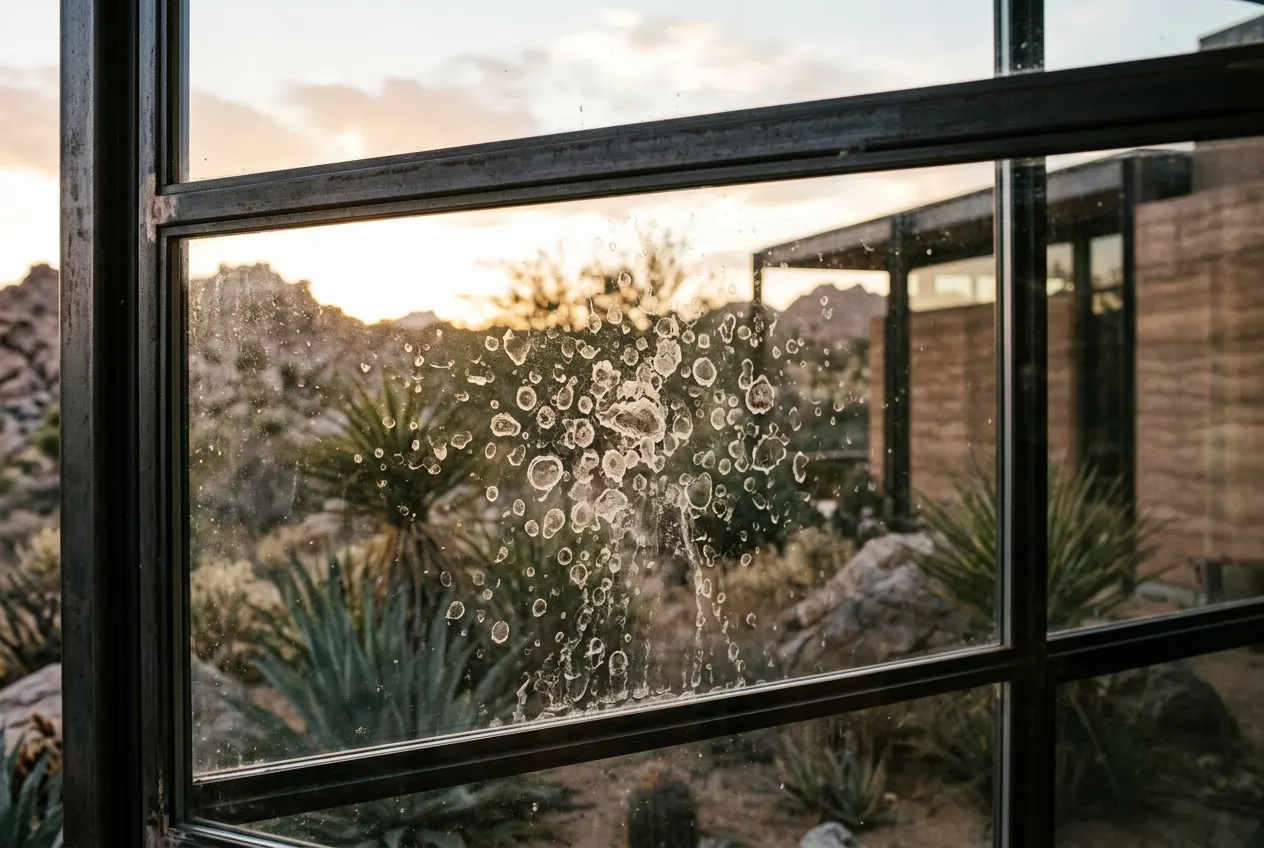
Irrigation overspray and hard well or municipal water leave calcium and magnesium deposits that begin as removable spotting and, with repeated wet-dry cycles in direct sun, progress to permanent surface etching. Redirect irrigation heads and drip emitters away from the glass line, and keep mist systems off the building envelope. Where the exposure cannot be eliminated, have a qualified applicator install a factory-approved hydrophobic or protective glass treatment early in the life of the building, since treatments cannot reverse etching that has already occurred.

Cleaning Method for Large-Format and Coated Glass
Low-emissivity coatings sit on the interior surfaces of the IGU, so the exterior lite is safe to clean, but surface abrasion and aggressive alkaline products still damage the outer face and the edge seal. Follow the glazing manufacturer's written maintenance guidelines, because the wrong chemistry can compromise the warranty.
- Upper and inaccessible panes: use a water-fed pole system with purified, deionized water, which dries spot-free and avoids ladder or lift contact with finishes and landscaping.
- Accessible panes: use a neutral-pH solution with a professional squeegee and microfiber, working top to bottom and detailing frame edges.
- Never use abrasive pads, steel wool or metal blades on coated, tempered or laminated units.

Motorized Sliders, Pocketing Doors and Track Maintenance
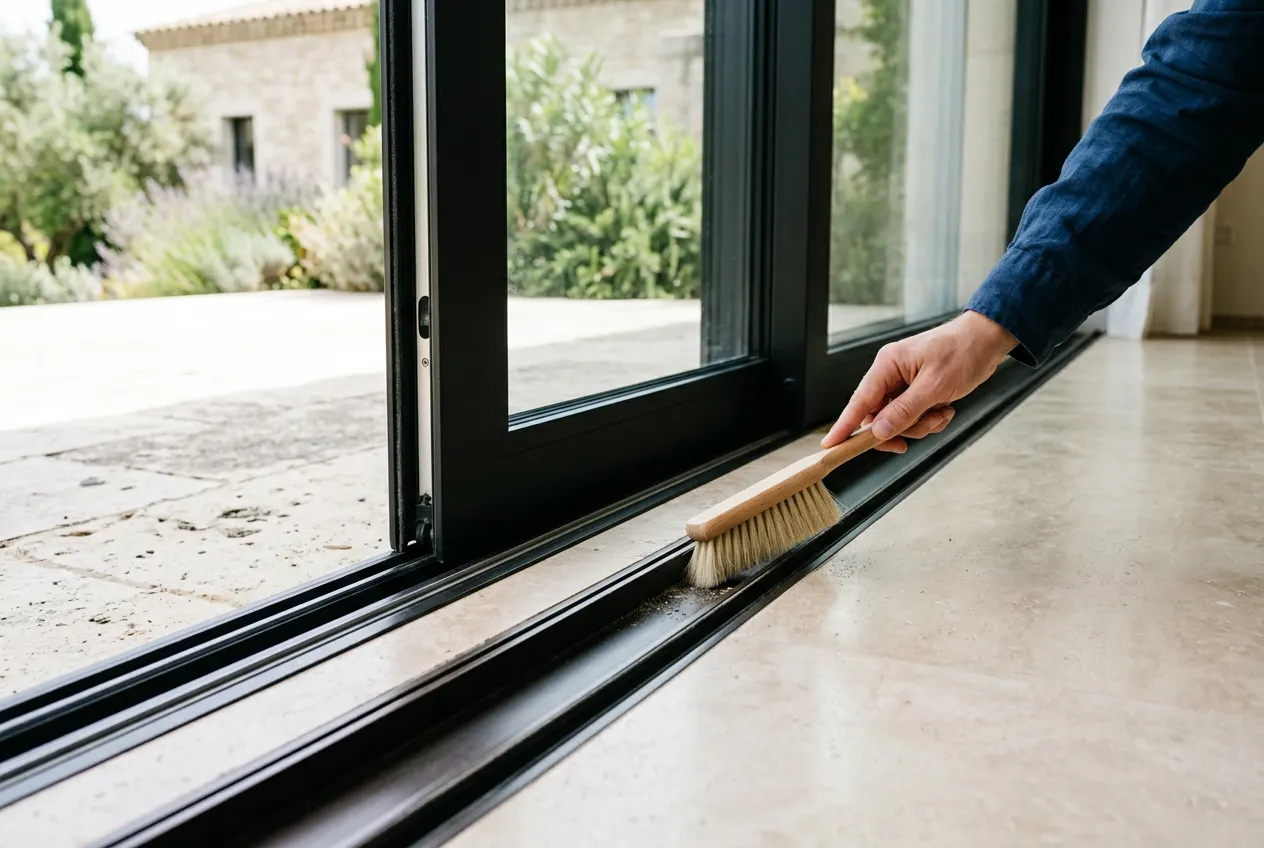
Desert dust, haboob events and monsoon runoff collect in sill tracks and weep holes. Blocked weeps hold water against the sash and can find a path into the wall cavity. Vacuum and clear tracks monthly in the monsoon season and quarterly otherwise, flush weep ports, inspect and lubricate rollers and carriages to the manufacturer's specification, and verify gaskets, brush seals and threshold flashing remain intact. Schedule an annual operator and drive-system service on motorized multi-slide and pivot systems. For more on door system selection, see our guide on sliding versus French door systems.
Thermal Stress and Interior Treatments
Interior solar shades, film and furnishings placed too close to the glass trap heat between the layers and raise surface temperature differentials across the lite, which is a recognized cause of thermal stress breakage in annealed and heat-strengthened glass. Coordinate shade pocket depth and clearance with the glazing supplier, and verify the glass type, tempered, heat-strengthened or annealed, against the expected exposure before any interior treatment is added.

Recommended Service Schedule
- Monthly during monsoon season: track and weep cleaning on all operable units.
- Quarterly: full exterior glass wash and frame detailing, plus inspection of sealants and gaskets.
- Semi-annually: interior glass cleaning and review of any hard water exposure along irrigated edges.
- Annually: operator, roller and drive service on motorized systems, and a written glass condition report for your home file.
FAQ
Questions, answered
How often should an estate with floor-to-ceiling glass be professionally cleaned?
A quarterly exterior wash is a sound baseline for the Phoenix metro area, with additional track and weep maintenance monthly during monsoon season and more frequent service on irrigated edges.
Can hard water damage to architectural glass be reversed?
Light spotting can often be removed, but once calcium deposits have etched the surface the damage is permanent. Prevention through irrigation redirection and an early protective treatment is far more effective.
What cleaning method is best for upper, high-elevation panes?
A water-fed pole system using purified, deionized water cleans safely from grade without contacting finishes, and it dries without spotting or streaking.
Can interior shades cause glass to crack?
They can contribute to thermal stress, especially on annealed or heat-strengthened glass where a shade traps heat close to the lite. Confirm glass type and clearance with the glazing supplier during design.