Preserving Wide-Plank Hardwood: Design & Care for Estate Pets
Discover the specific wood species, high-durability commercial finishes, and architectural selections that protect your custom flooring without compromising on aesthetic luxury.
- Reading
- 3 minutes
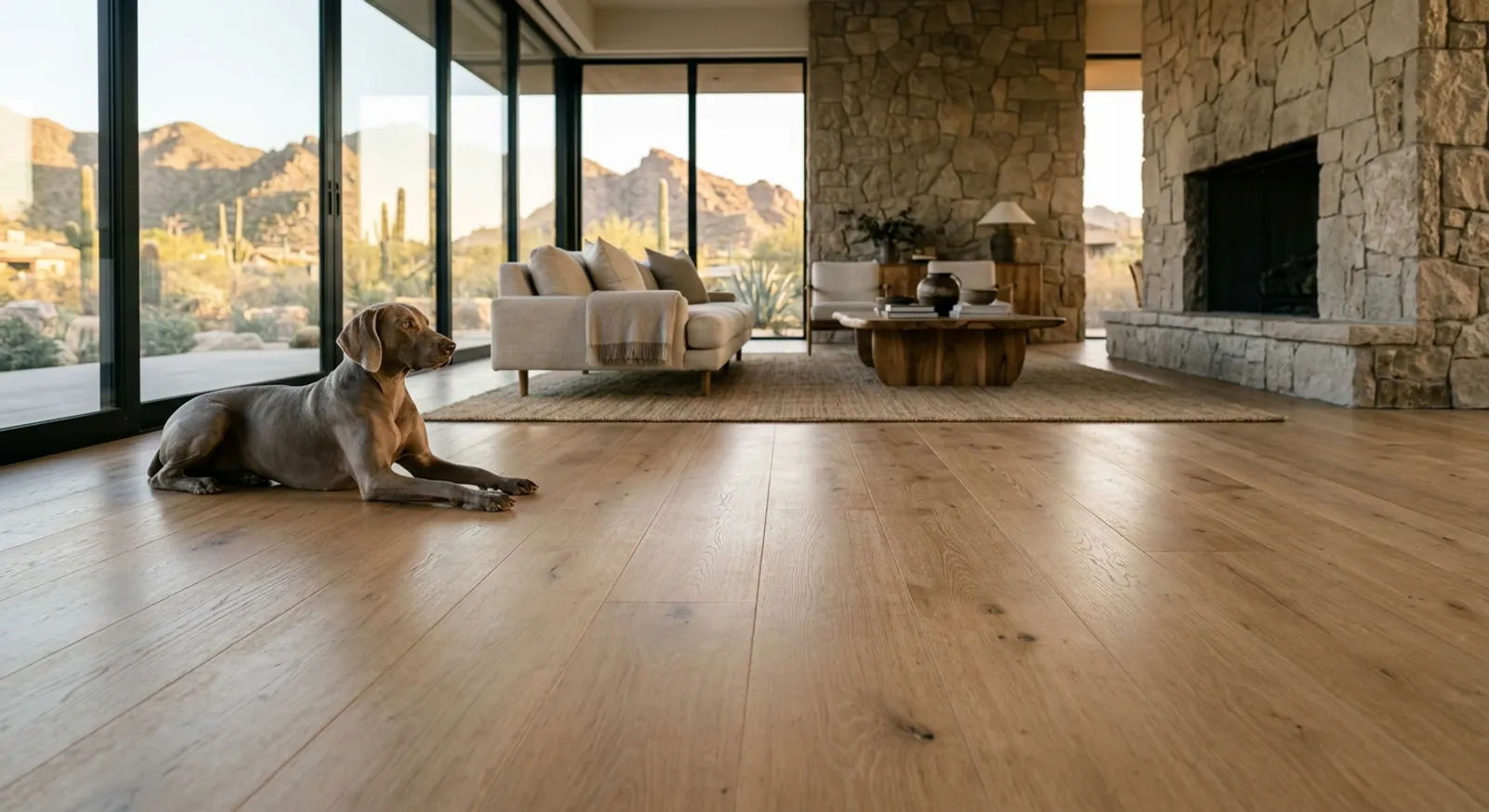
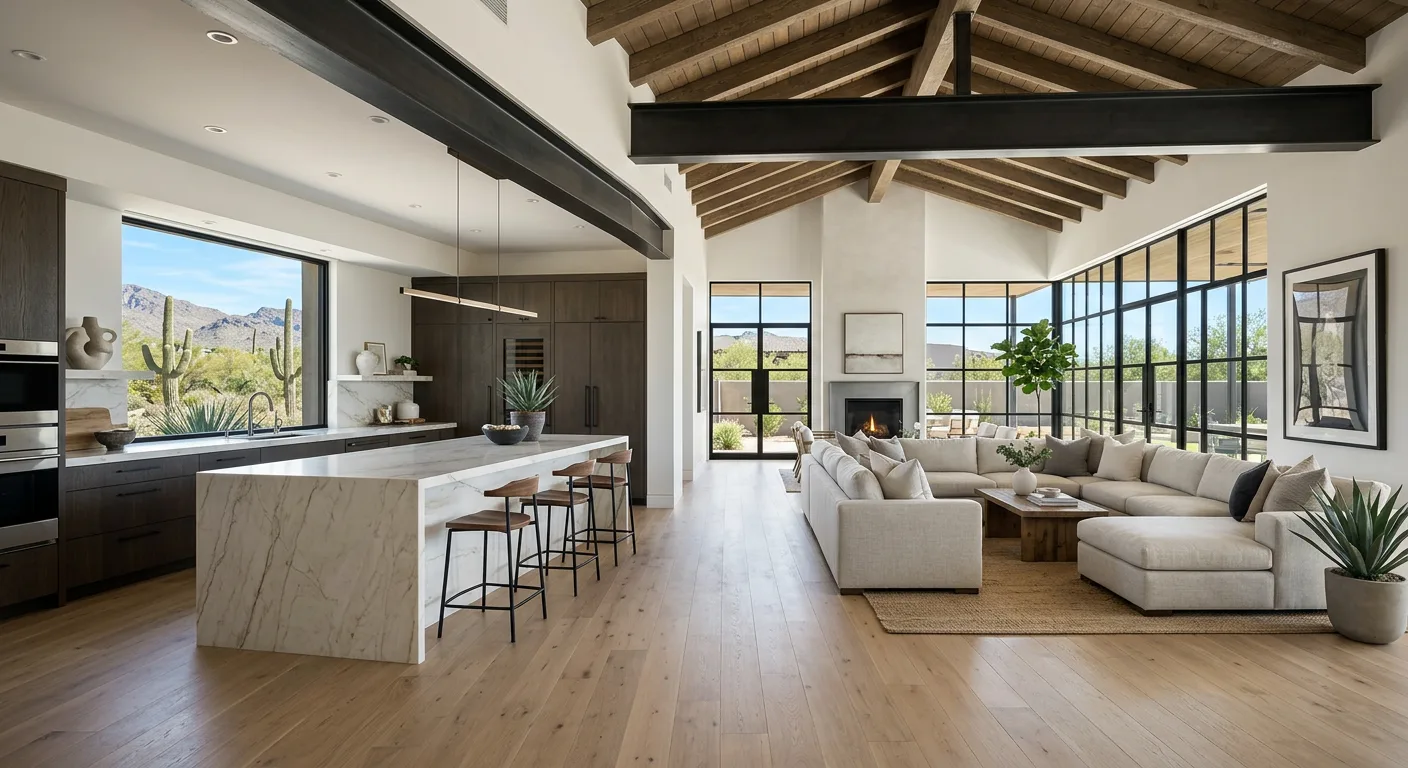
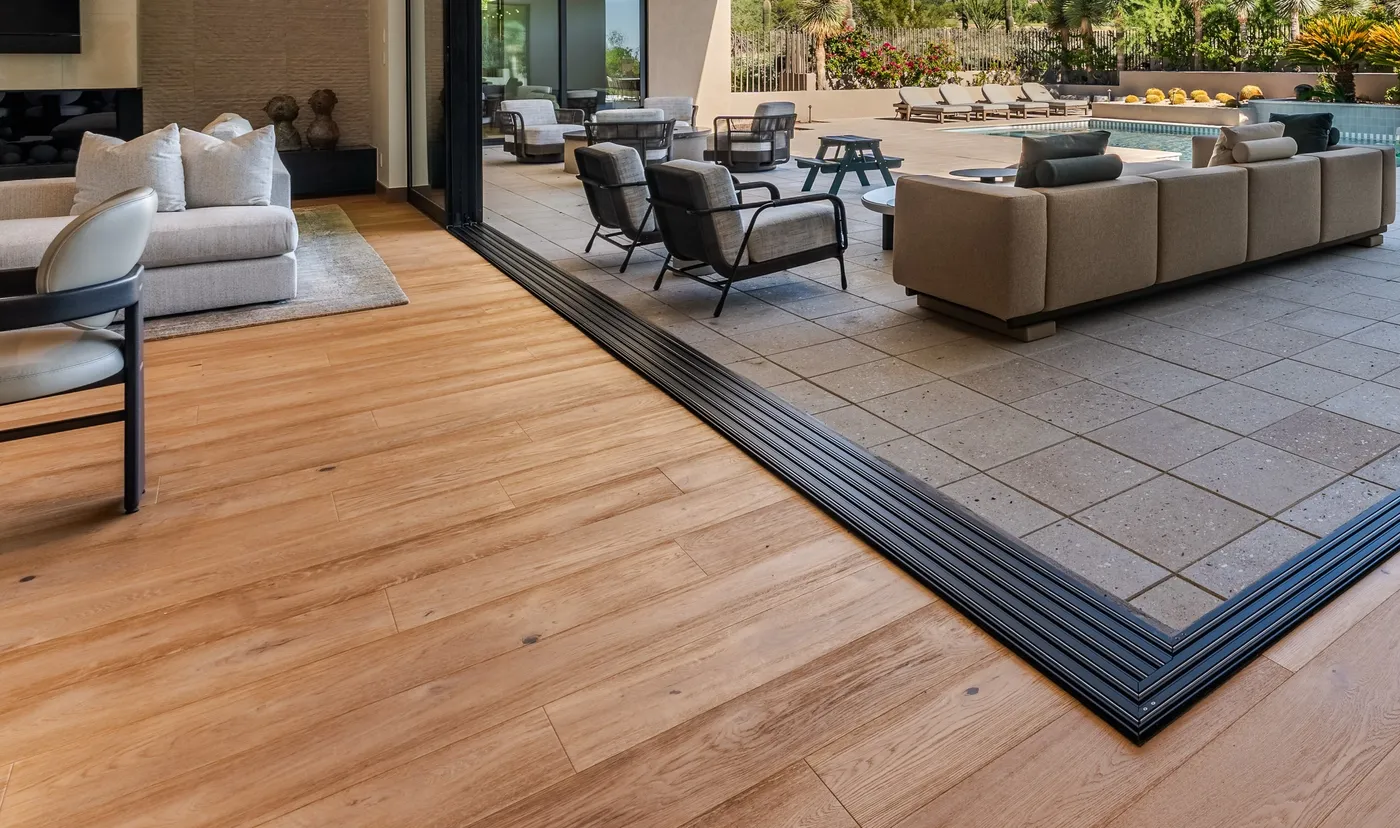
On a custom estate, the flooring package is usually among the largest single finish allocations, and it is the one surface every other trade has to work to. Wide-plank oak, laid in 7- to 12-inch widths and lengths approaching 10 feet, reads as architecture rather than finish. It also leaves very little room for error when working dogs, sporting breeds and a household of four-legged residents are part of the program. The goal is not to restrict the pets. It is to specify a floor system that tolerates them.
Species Selection and Janka Hardness in Context
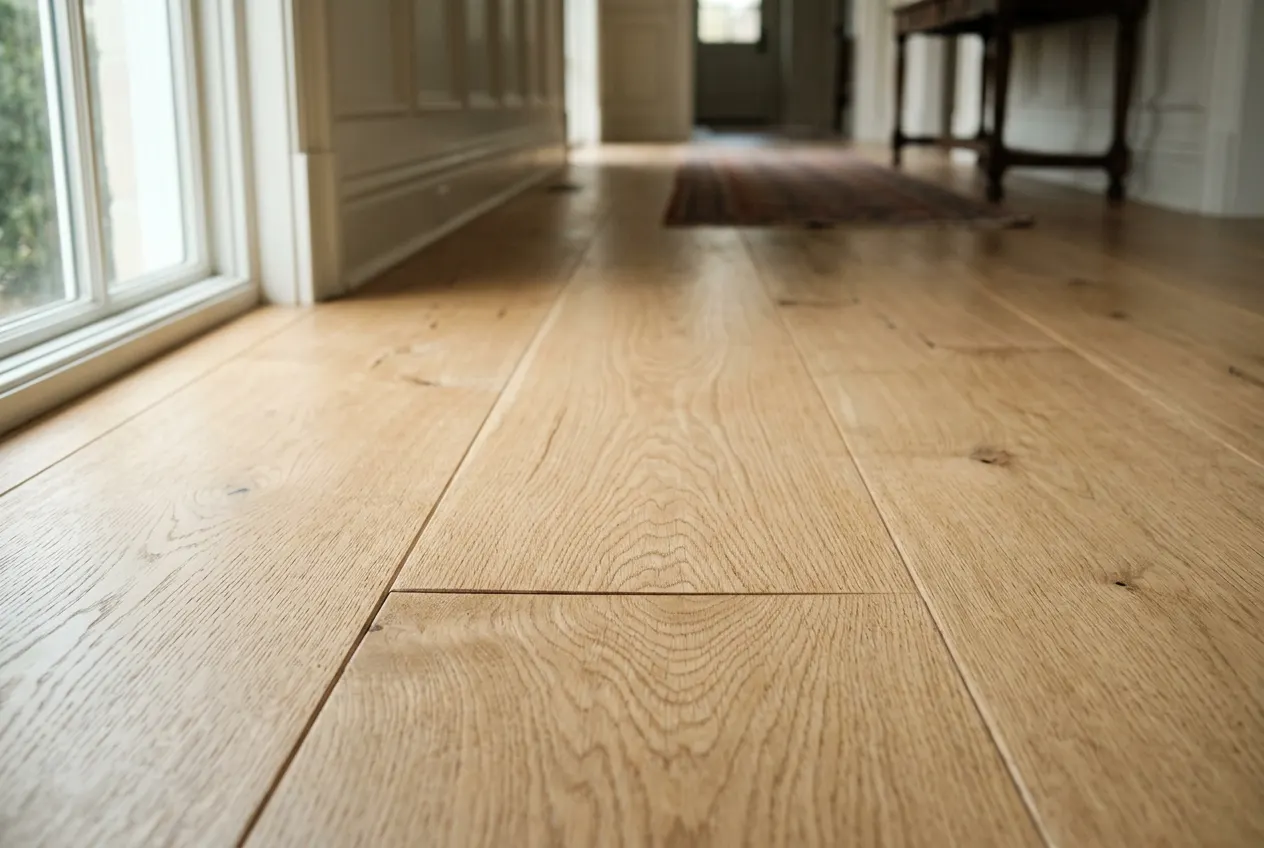
Janka ratings are a useful screening tool, not a specification. European white oak sits around 1,360 lbf, hickory near 1,820 and exotic species such as ipe well above 3,000, yet the harder species are rarely the right answer for a luxury residence. Dense, high-contrast species telegraph every scratch and tend to move more with seasonal humidity change. White oak remains the default for estate work because it pairs a moderate hardness with a tight, forgiving grain, takes stain and bleach-free natural tones evenly, and is dimensionally stable at wide widths.
Cut matters as much as species. Rift and quartered sawn oak is more stable across the board width and shows a straighter, quieter figure, which camouflages micro-scratching. Plain sawn carries more cathedral pattern and more movement. On a program with active dogs, we generally steer clients to rift and quartered stock for the main living areas and reserve plain sawn for lower-traffic suites.
Specifying a Commercial-Grade Finish System
The finish does the protecting, so it deserves the same scrutiny as the species. For high-traffic estates the realistic options are a waterborne or oil-modified polyurethane with an aluminum oxide additive, a catalyzed conversion varnish applied by a qualified finisher, or a hard-wax oil system.
- Aluminum oxide commercial polyurethane: the highest abrasion resistance of the group. Specify a low-sheen or matte topcoat, since gloss amplifies every scuff under raking light from floor-to-ceiling glazing.
- Site-finished versus factory-finished: site-finished floors let the finisher level plank edges and avoid pronounced micro-bevels that trap grit. Factory-applied aluminum oxide finishes cure harder, but bevelled edges can read as a visible grid across large rooms.
- Hard-wax oil: exceptional, natural hand and spot-repairable, but it requires a disciplined maintenance cycle and is not our first recommendation where the floor takes daily claw traffic.
Wire-brushed, lightly textured and reactive-stained surfaces perform well here. The texture breaks up reflected light so fine nail marks never read as a defect, and a spot repair does not announce itself the way it does on a smooth, high-gloss plane.
Engineered Construction and Wear Layer
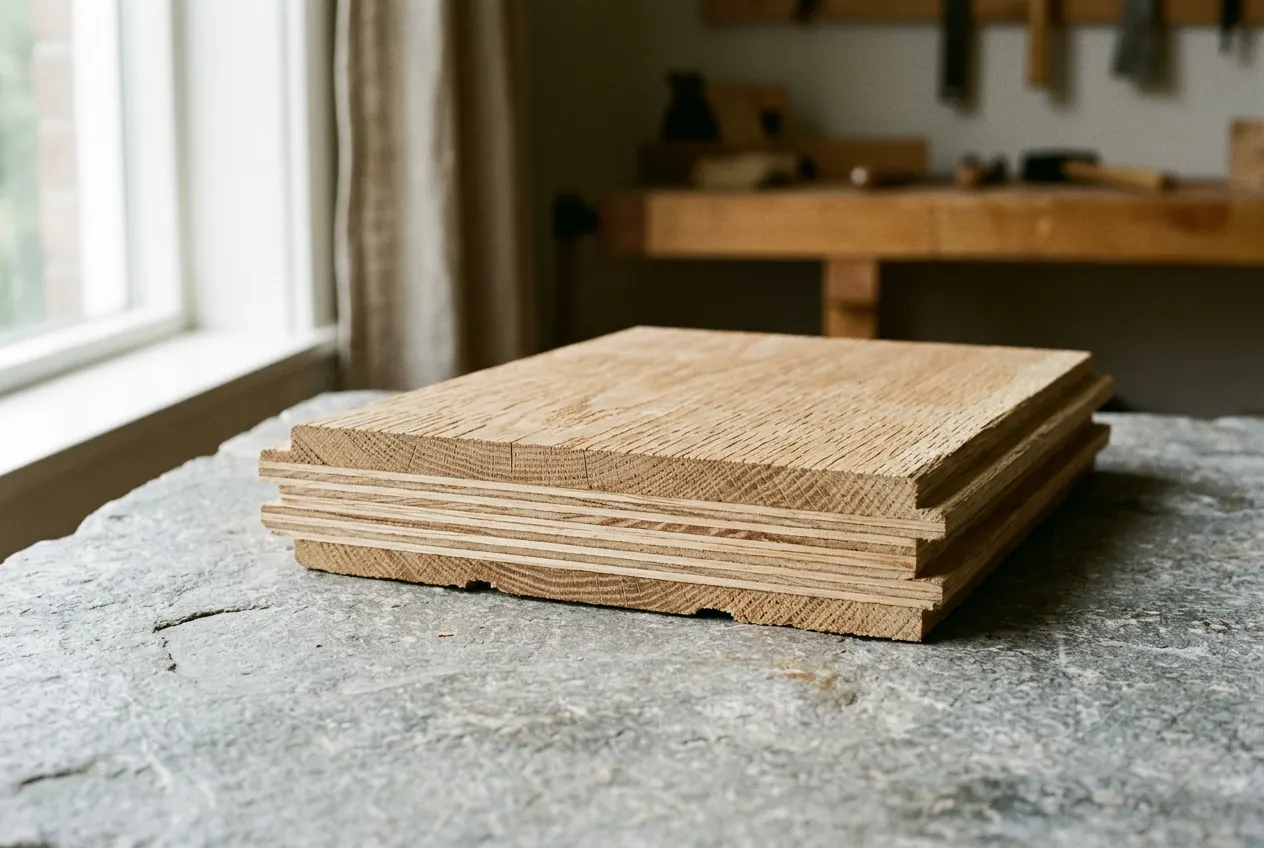
For large-format plank over radiant heating, or on a slab-on-grade condition, a multi-ply engineered board with a 4 to 6 mm solid-oak wear layer is typically the better engineering decision. It carries more stability than solid stock at 10-inch widths and still allows two to three full refinishes over the life of the floor. Confirm the manufacturer's radiant-compatible surface temperature limits with your mechanical contractor before the product is released to the job.
Moisture and Humidity Control in the Sonoran Desert
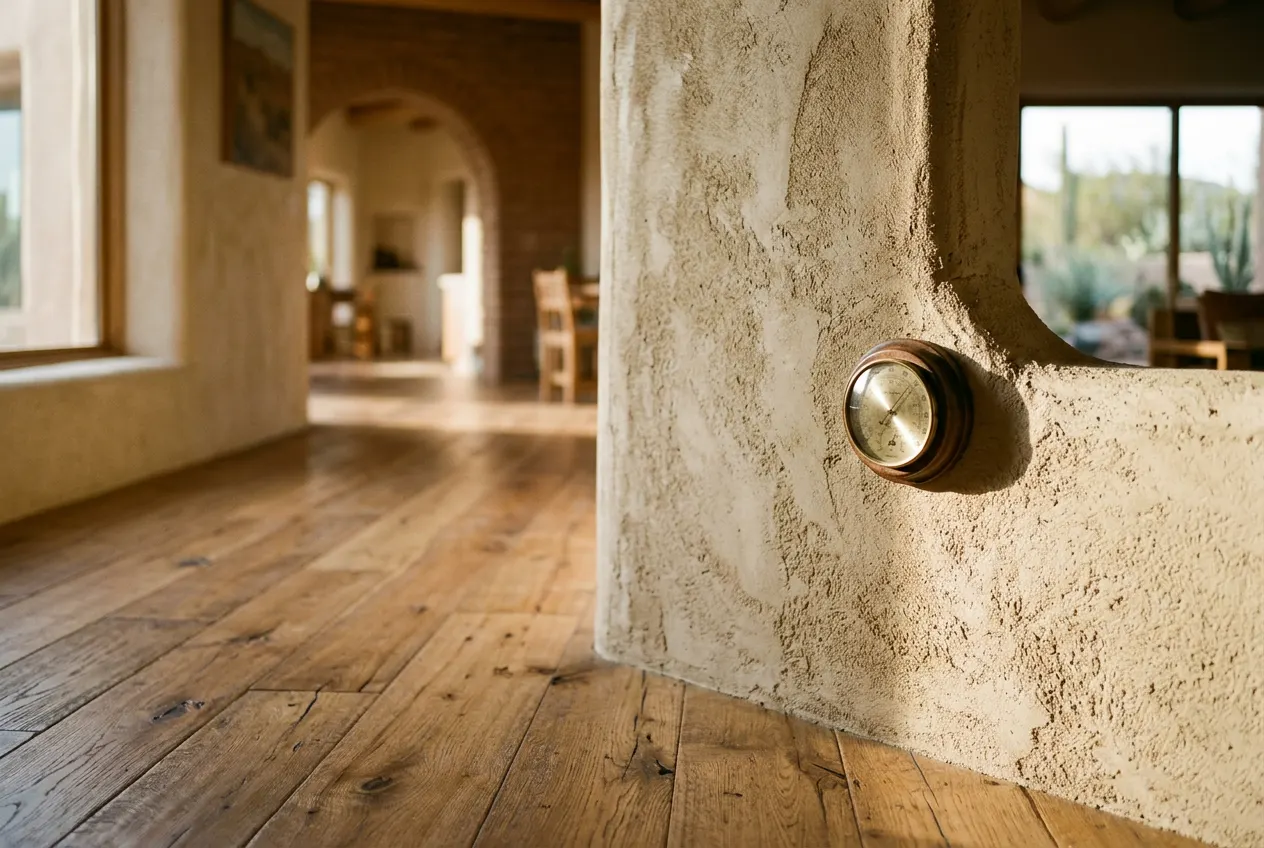
Interior relative humidity in Arizona regularly drops into the teens in the dry season. Wide boards respond with edge gapping and, in extreme cases, checking. Specify whole-house humidification set to hold roughly 35 to 50 percent RH, require a documented jobsite acclimation period, and confirm the subfloor moisture and flatness readings before installation. Scratch resistance is moot if the board has cupped.
Architectural Strategies That Reduce Wear
- Place a recessed, flush-set entry mat well at every exterior door so abrasive desert grit is stripped off before it reaches the oak.
- Use wool or flat-woven natural-fiber runners along established dog circulation paths, with a full-grip underlay that will not telegraph through the finish.
- Design a dedicated pet vestibule or mudroom with tile or honed stone underfoot, ideally with a hose-down floor drain and a grooming station.
- Detail floor transitions, thresholds and reveals tight and flush so dogs are not catching nails on an exposed edge.
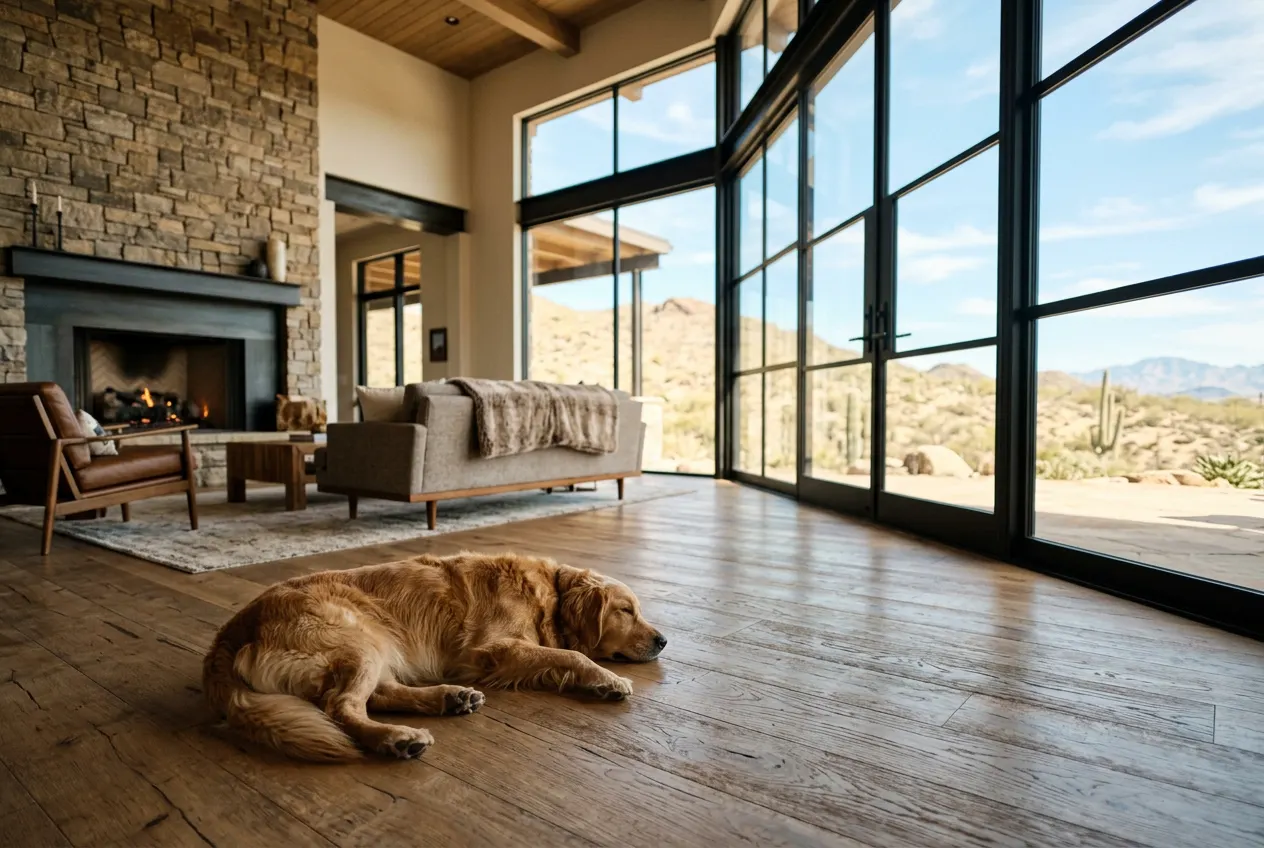
Maintenance Protocol for Estate Pets
Keep nails trimmed and filed on a regular schedule, which remains the single highest-value measure. Use a pH-neutral hardwood cleaner and a microfiber head rather than steam, and wipe liquid accidents promptly. On a commercial finish system, a screen-and-recoat every three to five years restores the wear surface before the sealer is breached, and costs a fraction of a full sand-and-refinish.
If your project is still in design development, bring flooring into the conversation alongside large-format glazing and door selections. Raking sunlight, exterior grit and thermal exposure all influence the right species, cut and finish.
FAQ
Questions, answered
What is the best wood species for a luxury home with large dogs?
For most estate programs, white oak in a rift and quartered cut offers the best balance of hardness, dimensional stability and forgiving grain. Harder species such as hickory or ipe resist denting but show scratches more clearly and are less stable at wide plank widths.
Which finish system holds up best to claw traffic?
A commercial-grade polyurethane with an aluminum oxide additive, applied in a low-sheen or matte sheen, gives the highest abrasion resistance. A matte, wire-brushed surface additionally masks fine scratching under direct sunlight.
Is engineered wide-plank flooring appropriate for a custom estate?
Yes. A multi-ply engineered board with a 4 to 6 mm wear layer is often the more stable choice at 10-inch widths and over radiant heat, and it still permits multiple full refinishes. Verify radiant temperature limits with the manufacturer.
How do you prevent gapping and cupping in a dry desert climate?
Control interior humidity at roughly 35 to 50 percent RH with whole-house humidification, document jobsite acclimation, and verify subfloor moisture and flatness before installation.