The Art of Window Architecture: Motorized Shades & Premium Textiles
An insider look at integrating automated solar shading seamlessly into your architectural drops, utilizing premium performance fabrics designed for the harsh Arizona sun.
- Reading
- 3 minutes
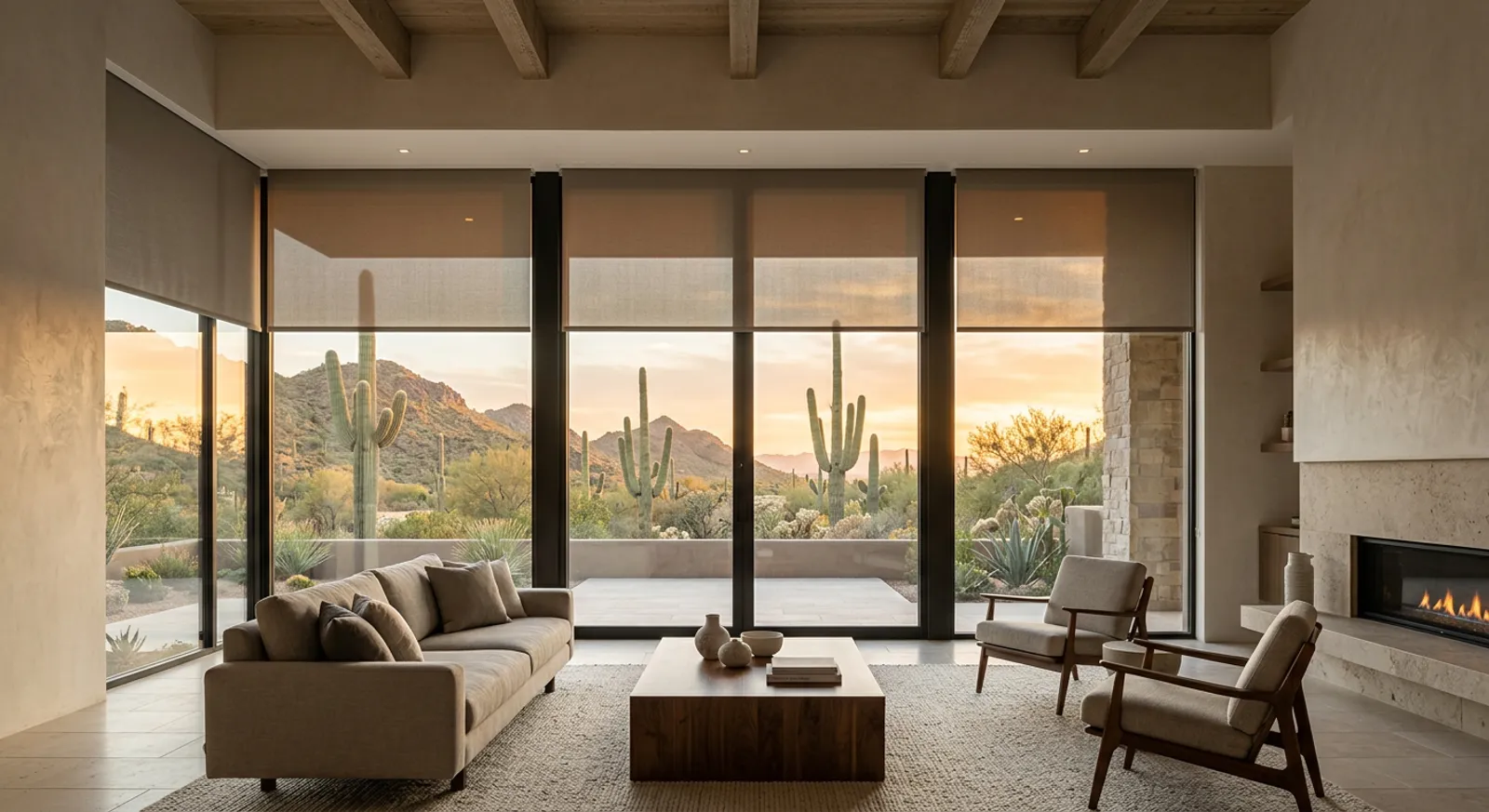
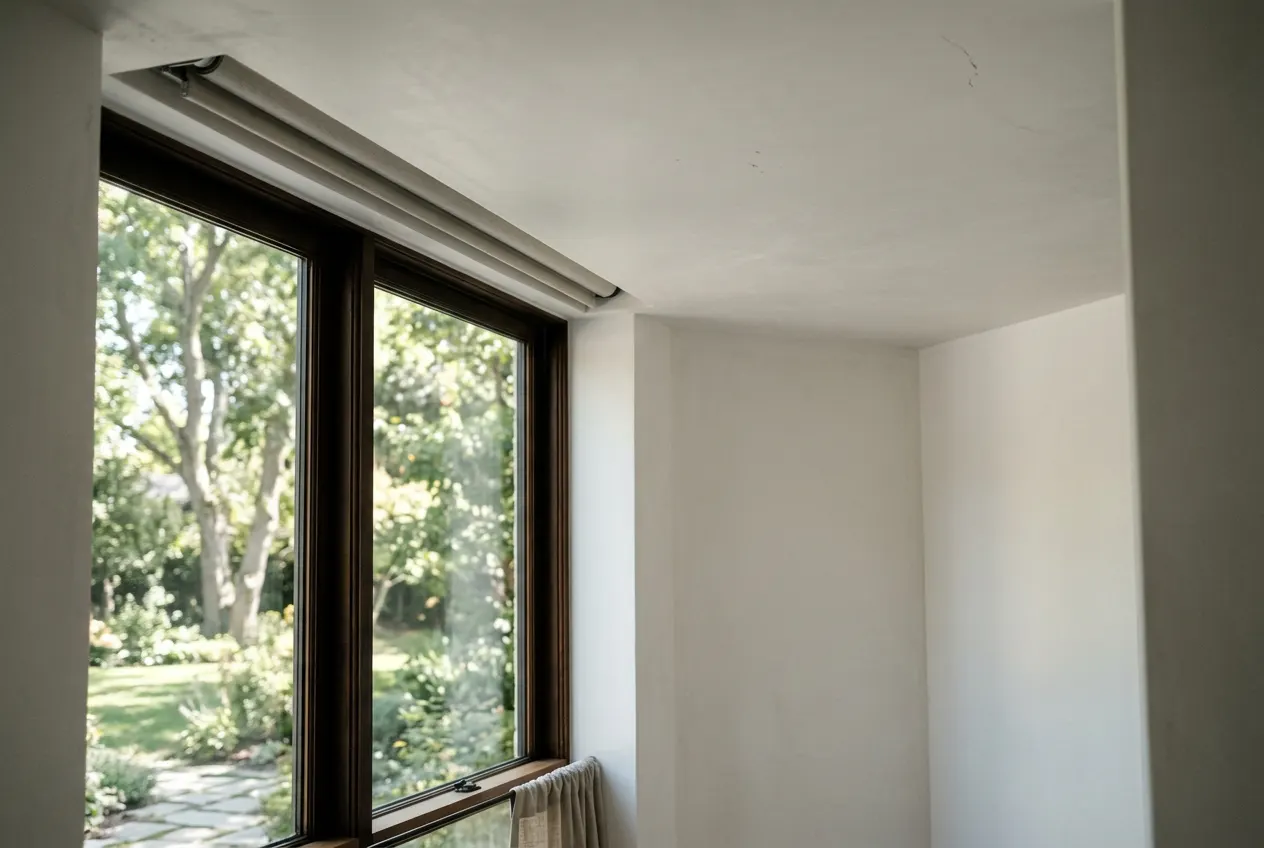
On a luxury residence, the window treatment is not an accessory. It is a mechanical and architectural system that has to be coordinated with framing, glazing, ceiling design, electrical rough-in and the home automation platform well before drywall. Specified late, motorized shading becomes an exposed fascia and a visible compromise. Specified early, it disappears into a recessed pocket and reads as part of the architecture.
Integrating Shades Into the Architectural Drop
The cleanest installations conceal the roller tube, motor and fabric in a recessed ceiling pocket, with the pocket opening flush to the finished ceiling plane. That requires coordination at the framing stage: pocket dimensions and structural blocking are set by the shade manufacturer's shop drawings, and the ceiling soffit or drop must be detailed for service access. Where a pocket is not feasible, a slim, flush linear fascia in a finish matched to the window frames is the alternative. Side channels or light-gap management should be specified wherever blackout or glare control is the objective.
Fabric Selection for the Arizona Sun
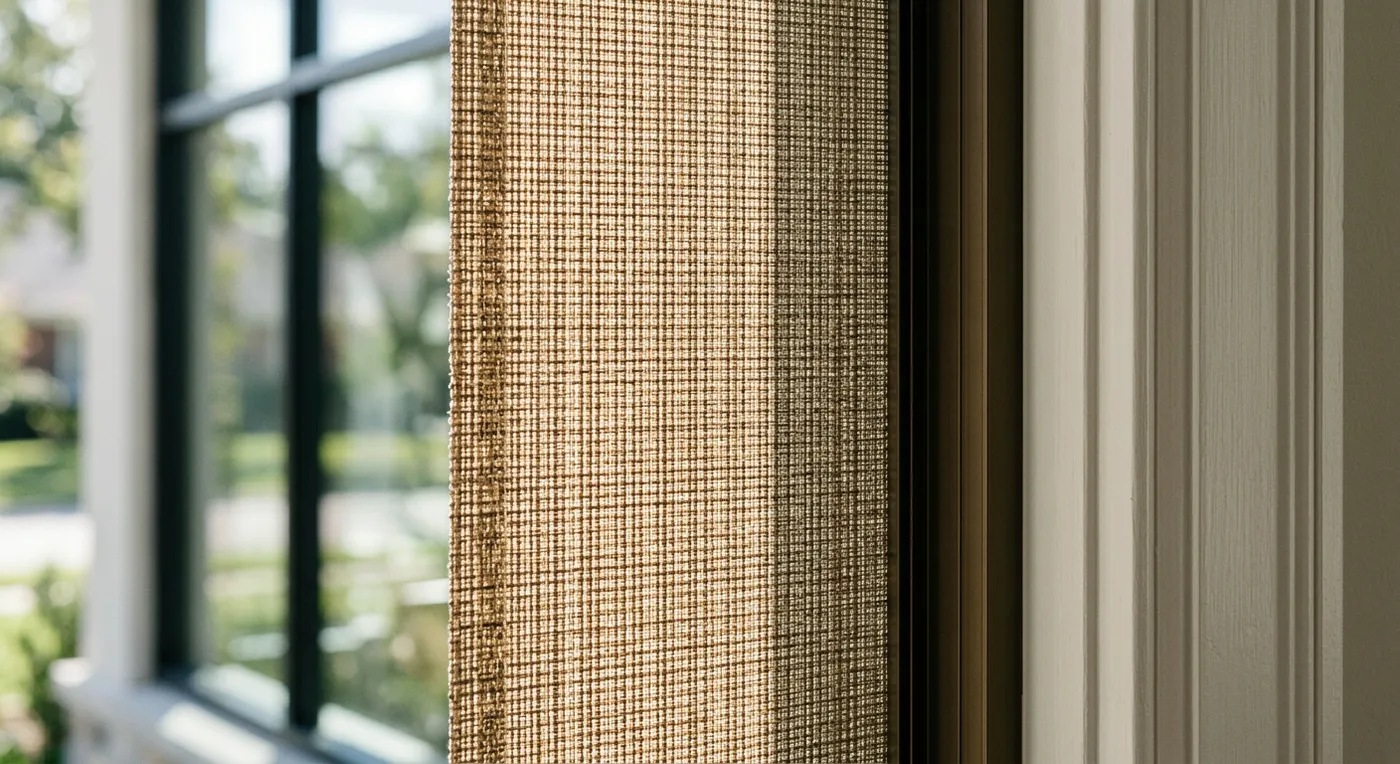
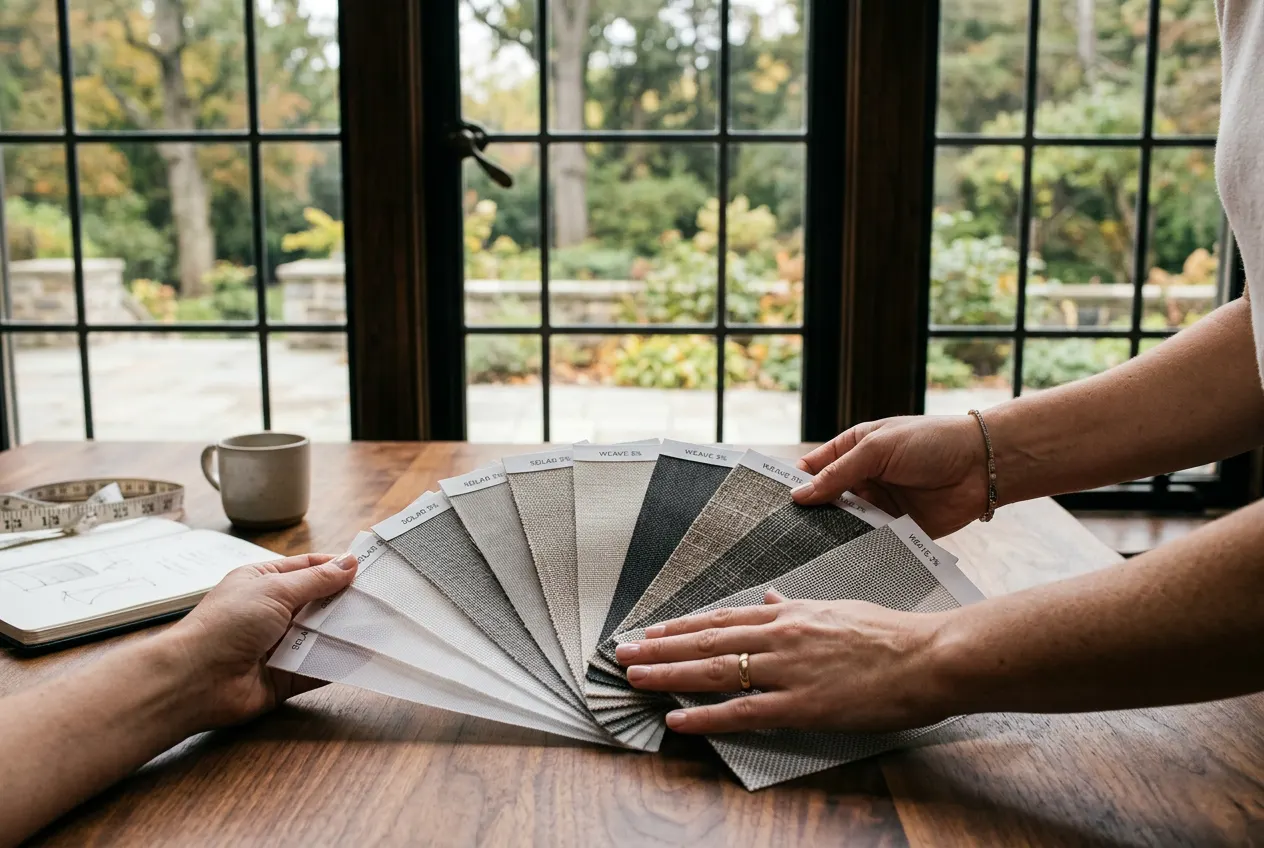
Performance fabric is specified on three measurable criteria: openness factor, composition and fire and lightfastness ratings.
- Openness factor: a 1 percent weave gives the highest glare and UV control and a more muted exterior view, while 3 to 5 percent opens the view and increases light transmission. West and south elevations typically justify the tighter weave. Views to the north can often take a more open weave.
- Composition: PVC-coated fiberglass and polyester weaves offer the best dimensional stability and fade resistance. Solution-dyed and PVC-free constructions suit projects with sustainability or low-VOC goals and should be confirmed for stretch and sag at large widths.
- Performance ratings: confirm flame-spread compliance, typically NFPA 701, and obtain the manufacturer's lightfastness and UV-degradation data, since a standard interior textile will chalk and fade in Arizona exposure.
Spanning Large Openings
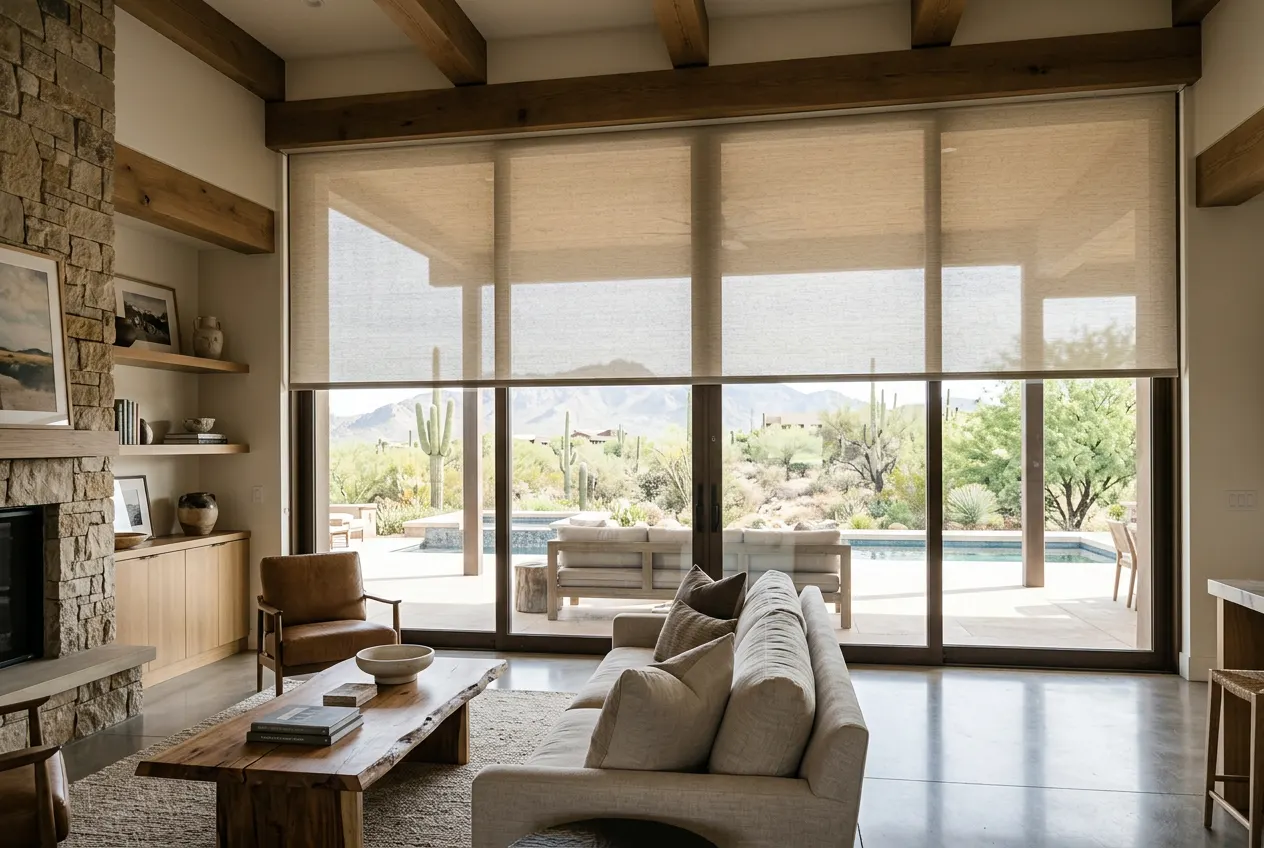
Floor-to-ceiling walls and corner glazing push shade width and drop to the limits of a single roll. Specify fabric that is available in the full width without a seam, confirm maximum width and drop against tube diameter and motor torque, and request matched dye lots across every shade within a view so adjacent units do not read as different colors. On multi-shade runs, ganged or synchronized control keeps the fabric hems aligned across the whole elevation.
Motors, Wiring and Control Integration
Decide the power strategy at rough-in. Line-voltage motors simplify wiring on large shades, while low-voltage systems centralize power at a distribution panel and suit large multi-shade installations with battery or hardwired control. Either way, run power and control wiring to every head before close-in, and coordinate protocols with the automation integrator, whether Lutron, Crestron, Control4 or a comparable platform. Astronomical-clock scheduling and exterior sun or irradiance sensors let the shades respond to solar position without any manual input, which is the difference between a convenience feature and a real reduction in cooling load.
Layering With Glazing and Interior Design
Treat shades as one layer in a coordinated system with low-E glazing, exterior overhangs and interior drapery. An exterior shading strategy reduces solar gain more effectively than any interior device, but interior solar shades give the flexibility and finish control luxury clients expect. When pairing a performance shade with a drapery layer, size the pocket and stack-back so neither covers the other when open. For smart control approaches, see our guide to smart window coverings.
Commissioning and Service
Limit stops, group assignments, scene programming and sensor thresholds should be set, tested and documented at commissioning, not left at factory defaults. Request as-built shop drawings and a motor and controller schedule for the home file, and plan for periodic fabric cleaning according to the manufacturer's instructions.
FAQ
Questions, answered
Which openness factor is right for a west-facing wall of glass?
A 1 percent weave is common on west and south exposures because it delivers the highest glare and UV control, while 3 to 5 percent suits elevations where preserving the view matters more than solar rejection.
Do motorized shades need to be planned during framing?
Yes. Recessed pockets, blocking and power or control wiring must be coordinated at rough-in. Retrofitting after drywall typically forces an exposed fascia.
Which fabrics hold up to the Arizona sun?
Solution-dyed and PVC-coated fiberglass or polyester performance weaves with documented lightfastness and UV data. Standard interior textiles fade and degrade quickly under intense exposure.
Can motorized shades integrate with a whole-home automation system?
Yes. Most premium systems integrate with platforms such as Lutron, Crestron and Control4, and can be scheduled by time of day or driven by solar sensors.